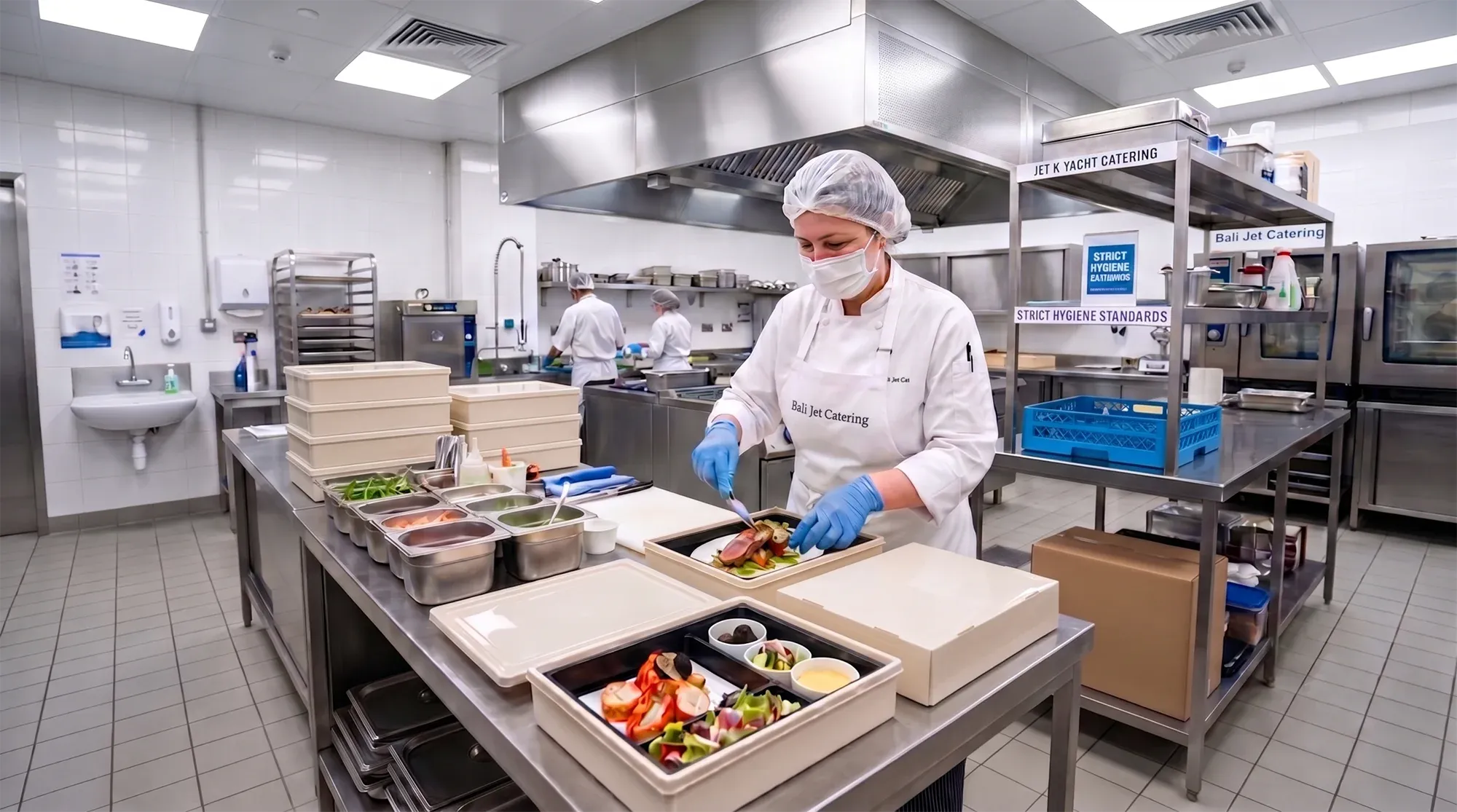
Why food tastes different at 40,000 feet
Low humidity and cabin pressure dull salt and sweetness and dry the palate. A look at how our chefs re-balance acidity, fat and texture so every course tastes as intended aloft.
At cruising altitude the cabin is a hostile place for flavour. Pressurisation and humidity below fifteen percent numb the palate, muting salt and sweetness by as much as a third while leaving sour, bitter and umami largely intact. A dish that sings on the ground can arrive flat at the pass.
Re-balancing the plate
We compensate deliberately rather than simply over-seasoning. Brighter acidity, a little more umami, considered fat and aromatic lift all carry through the dry air, and textures are built to survive a galley reheat without collapsing.
Every menu is tested the way it will be served: chilled, held, and regenerated on board. What leaves our kitchen is engineered for the cabin, not the tasting bench, so the last course tastes as deliberate as the first.
More insights
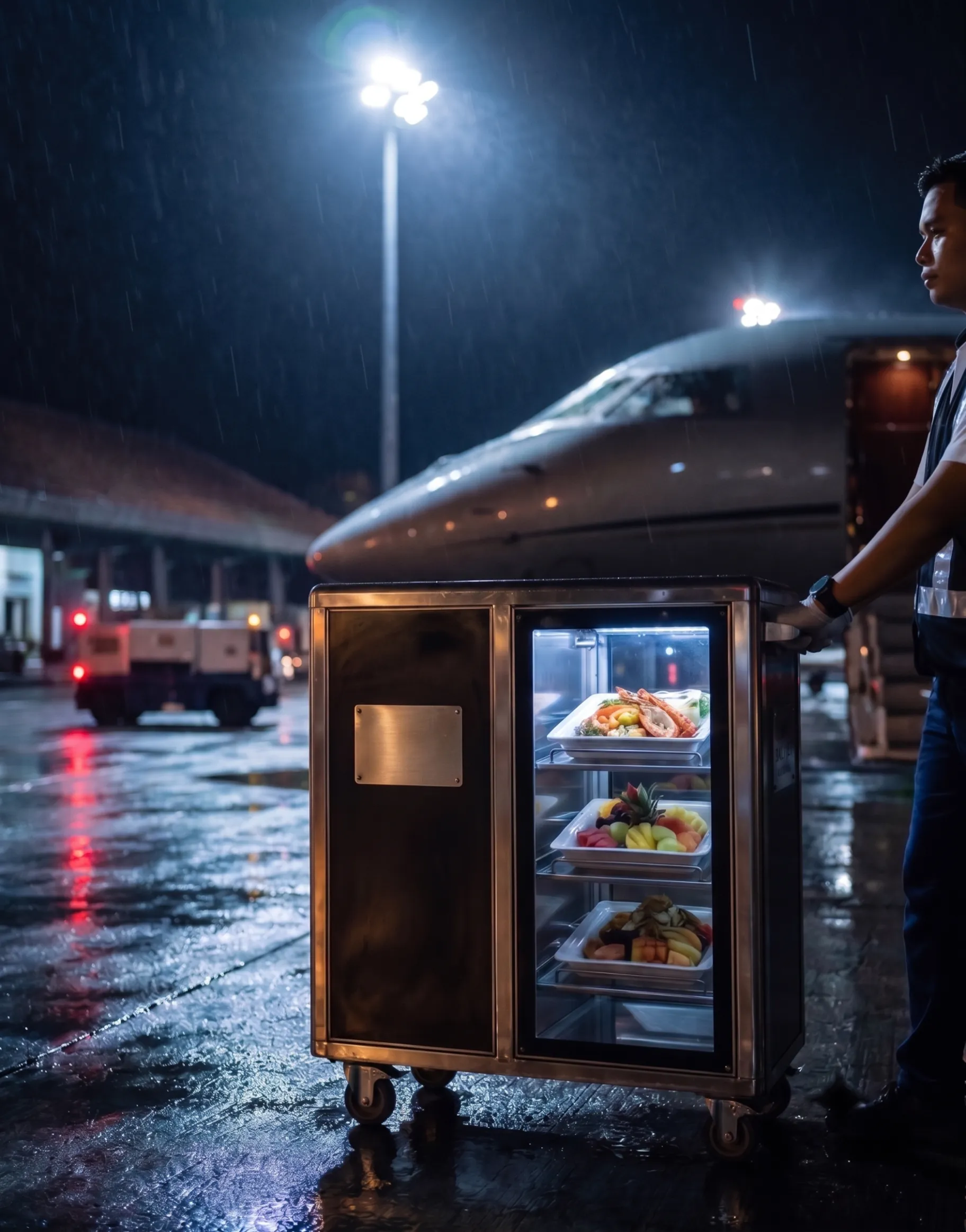
Inside a 02:00 turnaround at ExecuJet Bali
What it takes to clear catering to the apron when a manifest changes in the middle of the night.
Read article →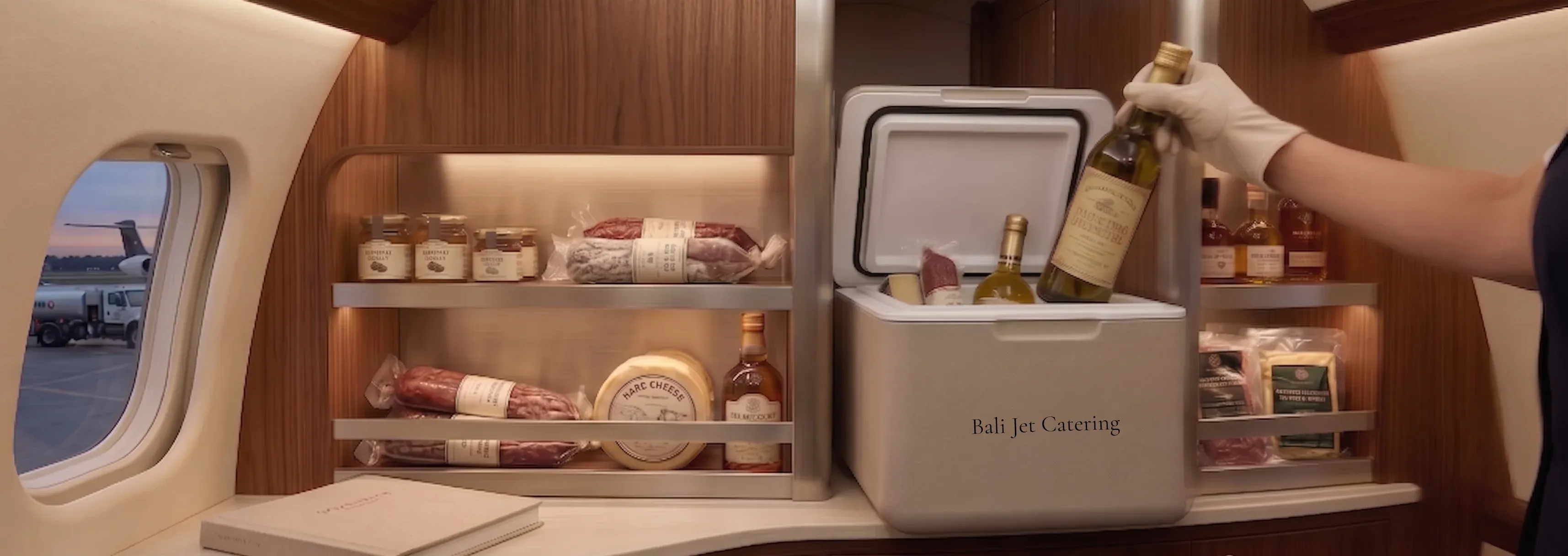
Provenance at altitude: building a cabin pantry
Where we source the grades and brands an executive cabin expects, and how they travel to the aircraft.
Read article →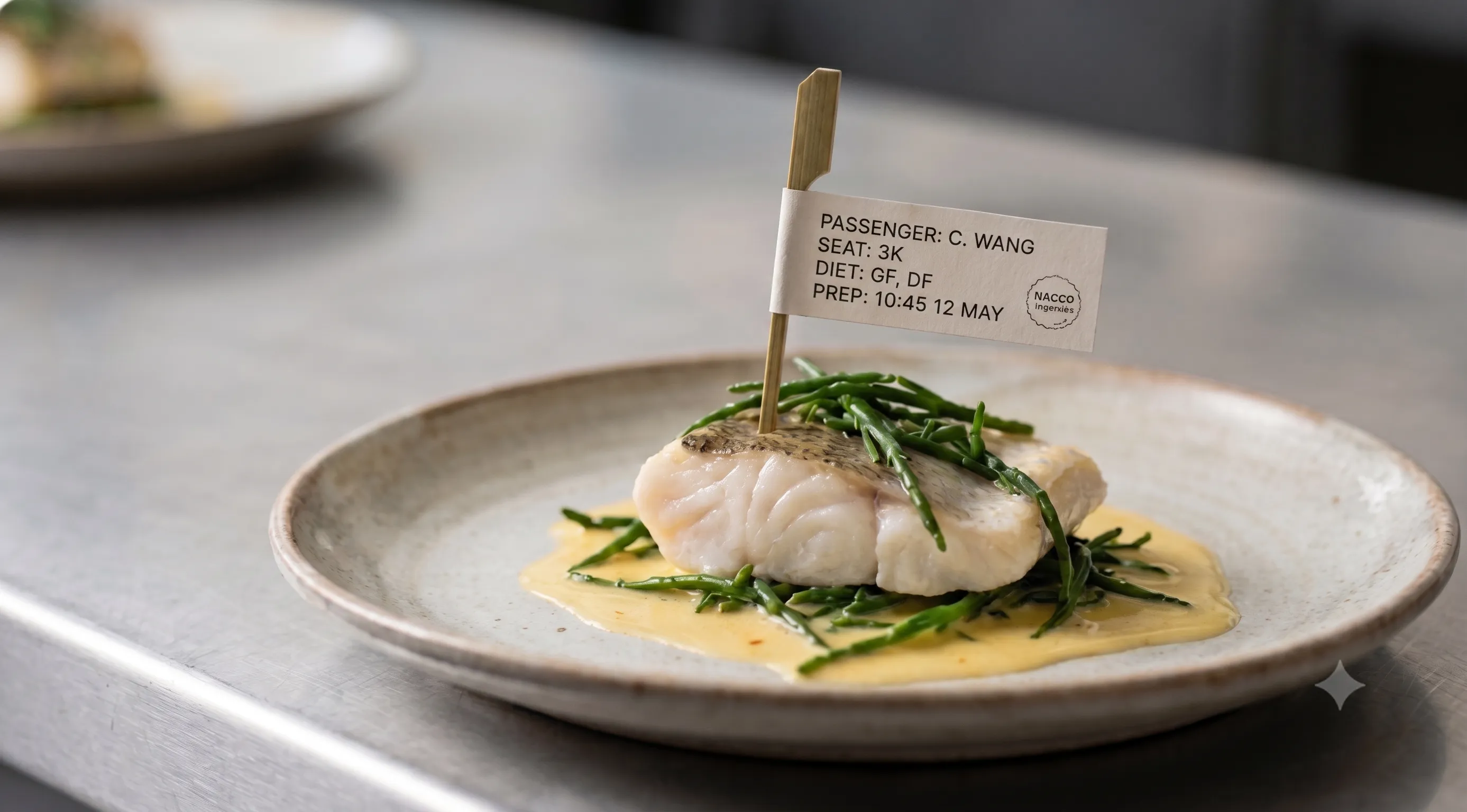
Allergen-safe service, without compromise
How a HACCP-controlled kitchen prepares medical and allergen diets that still plate beautifully.
Read article →Have a flight on the board? Our dispatch desk is open around the clock.
Operating on the water?
Catering or provisioning a yacht or superyacht in Bali? Our sister brands deliver the same standard dockside.